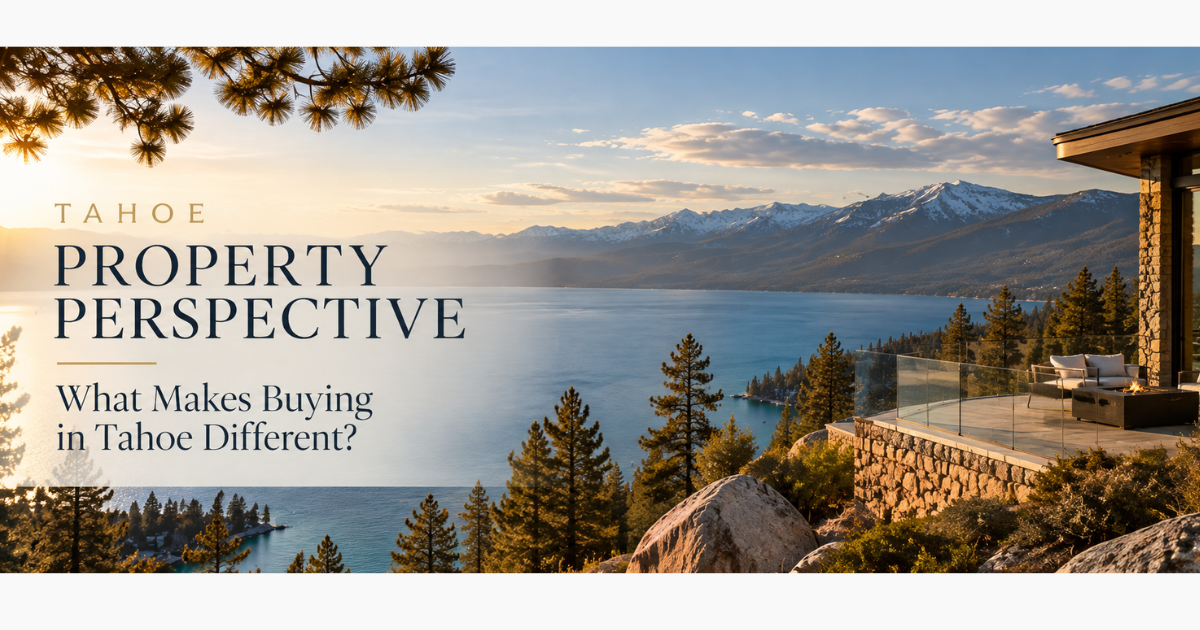
Buying a home in Lake Tahoe isn't necessarily more complicated. But there are a few things here that buyers may not encounter in other markets—and understanding them early can make all the difference.
Two Tahoe homes can look remarkably similar.
Similar setting. Similar views. Similar architecture. Even similar price points.
But when you look beyond the surface, they can present very different considerations for the person buying them.
That's because in Lake Tahoe, you're not simply buying a home. You're buying a property within a highly distinctive mountain environment, regulatory landscape and collection of local jurisdictions.
Here are a few things worth understanding before you fall in love with the view.
One of the concepts many buyers encounter for the first time in Tahoe is land coverage.
Within the Tahoe Basin, development is regulated in part by standards governing how much of a parcel may be covered by buildings and other improvements.
Why does that matter?
Because if you're envisioning a future addition, larger deck, garage or other improvement, what appears physically possible isn't necessarily the same as what may ultimately be permitted.
For buyers with future plans for a property, understanding existing conditions and potential development limitations before purchasing can be just as important as evaluating the home that's already there.
Lake Tahoe may feel like one community, but the Basin crosses two states and multiple local jurisdictions.
Depending on where a property is located and what you plan to do with it, different state, county, city and Tahoe Regional Planning Agency requirements may come into play.
That doesn't mean every Tahoe property is difficult to improve or modify.
It simply means that location can affect more than the view, neighborhood and price.
Understanding the jurisdiction—and asking the right questions about your future plans—is an important part of Tahoe due diligence.
For buyers accustomed to urban or coastal markets, property insurance may traditionally have been something addressed later in the transaction.
In a mountain and wildfire environment like Tahoe, it's worth discussing much earlier.
Availability, coverage and cost can vary based on the property and insurer. Wildfire risk and mitigation measures may also be part of the conversation.
The takeaway isn't to be discouraged by insurance. It's simply to make it part of your evaluation early enough that you understand how it fits into the overall cost and practicality of owning the home.
Are you buying a weekend retreat? A future primary residence? An investment? Do you envision remodeling? Adding space? Renting the property when you're away?
Those plans matter.
For example, short-term rental requirements vary by jurisdiction, and eligibility shouldn't be assumed simply because another home nearby is being rented.
Similarly, future improvements can involve property-specific considerations that aren't obvious during a showing.
Before purchasing, it's worth asking a simple question:
Will this property support the way I actually want to use it?
Buying in Lake Tahoe isn't about making the process complicated. It's about knowing what to look for before making a decision.
The architecture, setting and view may be what initially draw you to a property. But understanding its land, jurisdiction, insurance considerations and future possibilities can help determine whether it's truly the right fit.
Because “Do I love this home?” is only the beginning.
That's the perspective worth having before you buy.
INTERO LAKE TAHOE
California + Nevada